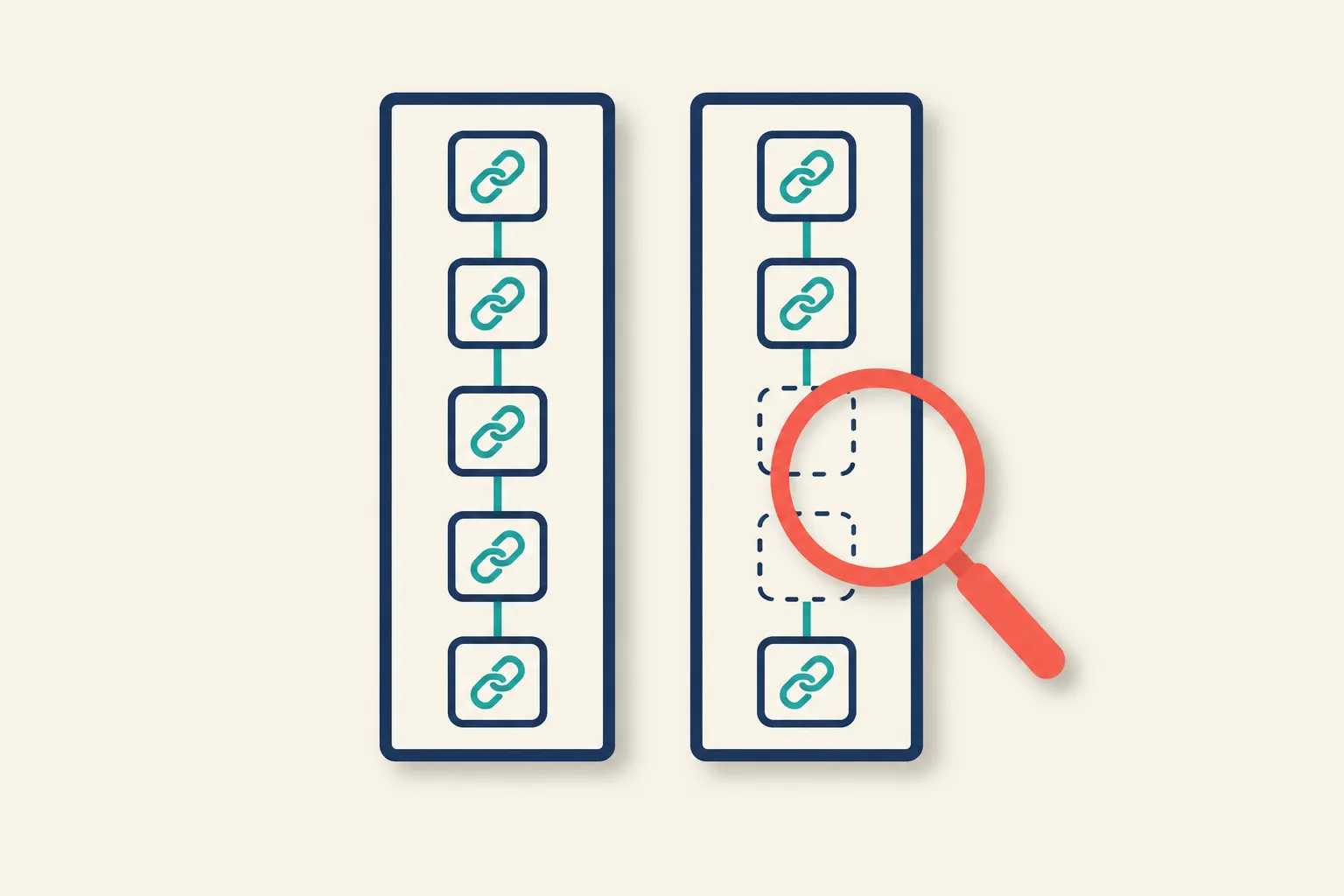
A backlink gap analysis compares your referring domains against several competitors’ to find sites that link to them but not to you. The workflow has three parts: pick 3-5 real competitors, pull each site’s referring domains (from Ahrefs, Semrush, or a GSC export), and isolate the domains that appear in their profiles but not yours. Domains linking to more than one competitor are the highest-value targets, since they’ve already shown a willingness to link to sites in your space.
Picking Competitors Worth Comparing Against
The analysis is only as good as the competitor set. Pick sites that rank for the same terms you’re targeting and sit in a similar authority range, not the largest brand in the niche. Ahrefs recommends using Domain Rating to find competitors with higher authority in a similar size range, rather than picking aspirational competitors five times your size. A domain with 10x your Domain Rating earned most of its links from years of brand recognition you can’t replicate with an outreach campaign. Three to five competitors is the practical range: enough to spot patterns, not so many that the overlap list turns into noise.
Pulling the Data and Finding the Overlap
Once you have your competitor list, the mechanics are the same across tools: feed in the competitor domains, feed in your own, and the tool returns everything that links to at least one competitor but excludes your domain.
Ahrefs’ Link Intersect tool supports up to 10 competitor domains at once and offers two modes: Referring Domains Intersect, which lists domains linking to your competitors sorted by DR and traffic, and Referring Pages Intersect, which surfaces the specific pages doing the linking, useful for finding resource lists and roundups you can pitch directly.
Semrush’s Backlink Gap tool works the same way but caps the comparison at five competing websites at once. It scores each prospect with an Authority Score, shows estimated Monthly Visits, and includes a Matches column showing how many of your competitors that domain links to.
Moz’s Link Intersect, inside Link Explorer, runs the comparison at the root domain, subdomain, or exact-page level and lets you add promising prospects straight to a Link Tracking List for later outreach follow-up.
| Tool | Competitor limit | Prioritization signal | Export |
|---|---|---|---|
| Ahrefs Link Intersect | Up to 10 | DR, traffic, referring-domain overlap | CSV |
| Semrush Backlink Gap | Up to 5 | Authority Score, Monthly Visits, Matches | CSV/Excel |
| Moz Link Intersect | Root domain, subdomain, or page level | Domain authority, Link Tracking Lists | CSV |
If you don’t have a paid subscription, a rougher version works with free data: export your own site’s links from Google Search Console, then manually spot-check a handful of competitor backlinks by searching site:example.com "competitor name" for known industry directories, roundups, and resource pages.
Prioritizing Which Gaps Are Worth Chasing
A raw list of domains linking to competitors is not a to-do list. Most gap-analysis reports return hundreds of rows, and treating every one as equally worth an outreach email wastes time on low-quality directories and abandoned blogs. Sort the list by two factors: how many competitors a domain links to, and the quality of the domain itself.
High priority: domains linking to three or more of your competitors. These sites have a pattern of linking within your niche, which means the fit is already proven and the pitch is easier (“I noticed you link to [competitor], here’s why our resource on X is a good addition too”).
Medium priority: domains linking to exactly two competitors. Still worth pursuing, but check relevance manually before adding to the outreach list.
Low priority: domains linking to only one competitor. These may be one-off mentions, guest posts the competitor no longer controls, or low-quality directories that happened to include one rival. Spot-check a sample rather than pursuing the full list.
Within each tier, filter out anything that looks like a link farm, an expired-domain redirect, or a directory with no editorial standard. A domain with high traffic and one relevant, in-context mention of a competitor is worth more outreach effort than ten low-traffic directory listings.
A useful worked example: if your gap report returns 40 domains and 6 of them link to all 4 competitors you compared against, those 6 go to the top of your outreach queue this week. The other 34 get triaged in batches of ten, checked for topical relevance and real traffic before any email goes out.
Once you’ve built your prioritized list, a step-by-step backlink audit of your own current profile helps you see the gap in context, since a site that’s leaking existing links needs to fix that before spending outreach hours chasing new ones. Comparing your own profile against benchmarks for what a healthy backlink profile looks like also tells you whether the gap is really about volume or about link quality and relevance.
After You Land the Link: Verifying It Actually Went Live
Gap analysis tells you where to send outreach. It does not tell you whether the links you earn afterward actually stay live, keep their intended anchor text, or stay dofollow. That’s a separate, ongoing job: once a site agrees to add your link, drop the export into a verification pass to confirm the URL, anchor text, and link attribute (dofollow, nofollow, sponsored, or UGC) match what was promised. BacklinkTower runs that check on a list you already have, whether it’s a fresh export from an outreach campaign or your full referring-domains list from Ahrefs or Search Console, and flags anything that dropped, changed anchor, or went nofollow on a re-check. It’s a complement to the discovery tools above, not a replacement: Ahrefs, Semrush, and Moz help you find the gap; verification and monitoring confirm the links you closed the gap with are still doing their job months later.
That distinction matters because Google is explicit that disavowing links is a narrow, exception-based tool, not a routine maintenance step: “In most cases, Google can assess which links to trust without additional guidance, so most sites will not need to use this tool.” The everyday work is verifying the links you earned are still configured the way you expect, not preemptively disavowing anything unfamiliar.
If a full competitive review is the goal rather than a one-off list of prospects, a structured competitor backlink analysis workflow walks through the broader comparison: overlap, velocity, anchor patterns, and referring-domain quality side by side.
Frequently Asked Questions
How many competitors should I include in a backlink gap analysis?
Three to five is the practical range. Fewer than three makes the overlap list too thin to spot real patterns; more than five (the cap on tools like Semrush’s Backlink Gap) mostly adds noise rather than better targets.
What’s the difference between a backlink gap analysis and a general competitor backlink analysis?
A gap analysis has one specific output: a list of domains linking to competitors but not you. A broader competitor backlink analysis also looks at link velocity, anchor-text patterns, and overall profile quality, not just the missing overlap.
Can I run a backlink gap analysis without a paid tool?
Yes, with more manual work. Export your own backlinks from Google Search Console, then manually check whether known competitors appear in industry directories, resource pages, and roundups you can find with targeted searches. It’s slower and less complete than Ahrefs, Semrush, or Moz, but it works for a first pass.
Does a high Matches or overlap count guarantee I’ll get the link?
No. It means the domain has a demonstrated pattern of linking to sites in your space, which makes the pitch easier, not automatic. You still need a genuinely relevant page or resource to offer, and the outreach itself still has to land.
Should I disavow domains that show up linking to competitors but look spammy?
Not automatically, and not because they showed up in a gap report. Disavowing is for links pointing at your own site that risk a manual action, not for domains you’re evaluating as potential outreach targets. If a spammy-looking domain already links to you and you’re worried about it, that’s a backlink audit question, not a gap-analysis one.
How often should I redo a backlink gap analysis?
Quarterly is reasonable for most sites. Competitor link profiles shift over months, not days, so a monthly re-run mostly re-surfaces the same prospects. Redo it sooner if you add a new major competitor or launch a new content cluster you want links into.
Leave a Reply